
Remembering David Berman, Part 1
Some thoughts on the man of lyric

This week I attended a memorial/tribute concert for David Berman, the lead singer and songwriter of the Silver Jews and later the Purple Mountains. In the course of writing about the concert, I ended up writing a great deal more than I intended. This first part is more broadly about my interpretation (and appreciation) of Berman’s ouevre; next week I will publish my report of the concert.
coming late to David Berman
David Berman was born in 1967 and released his debut album with the Silver Jews in 1994. He spent the next 25 years as an on-again, off-again cult hero; the makeup of the Jews would change repeatedly over the years, and Berman himself was a genuine recluse, deeply unsettled by the experience and performance of fame.
It was July 2019 when I first heard about Berman. After disbanding the Jews and embarking on a decade of self-imposed hermitude in Nashville—playing no shows, releasing no music, rarely accepting interview requests—Berman was back. He had a new band, having adopted the psychedelic rock outfit The Woods and turned them into the Purple Mountains. With Berman as the frontman and singer-songwriter—it should go without saying that David Berman was always in control of the words—the weirdo icon was primed to enter a late-career, halcyon era. His first singles were received with glowing praise from the Gen X music critic intelligentsia. While David Berman inhabited a niche world, he was also on top of it.
When Berman committed suicide shortly thereafter, I wasn’t quite sure how to react. I wrote a little piece about his passing for my blog at the time, but I was embarrassed by my own lateness; I didn’t want to overdo it, to make it seem like I was in the know for longer than I was. At the time I basically only knew his stuff with the Purple Mountains, which was easier on the ears than the Silver Jews.
It took me over a half-decade to return to Berman’s work in depth, and really explore his discography. Once I did—almost exactly one year ago, in January of 2025—I was immediately head over heels.
the songs, and their detours
Liking Berman—loving Berman, as I do—is about learning to appreciate the detours within songs, the ideas hidden inside of other ideas. Take “Slow Education,” a languid alt-country number with steel pedal guitar, a barely-there fleeting taste of a song, Biblical scope in its lyrics:
When God was young
He made the wind and the sun
And since then
It’s been a slow education
But then it’s like he has a better idea, or a different idea, or something more pressing that Berman has to get off his chest. He sings it sweetly, earnestly, lilting upwards:
And you got that one idea again
That one about dying
I love “Slow Education,” and listen to it often. The song is structured such that the suicidal lines are the ones you want to sing along to, the words you find yourself belting in the car. You find yourself singing at the top of your lungs that you got that one idea again. The one about dying.
Or you could look to "Punks In The Beerlight,” a driving and upbeat Strokesy garage-rock anthem, genuinely catchy, a goofy power-pop chorus about Punks in the beerlight, burnouts in love. But there’s depth—esoterica, at least—nested in this song, too. In the song’s first (and only) pre-chorus verse, Berman uses his best Lou Reed voice to layer foreboding over a series of bizarre leading questions:
So you wanna build an altar on a summer night?
You wanna smoke the gel off a fentanyl patch
Ain'tcha heard the news? Adam and Eve were Jews
Has anyone ever written such a mysterious, alluring mixture of song lyrics? In the best Berman songs, the meanings are slippery, hard to grasp, but clearly there; he clearly means to say something. As I grow closer to his lyrics, as I study them in greater depth, the spiritual and theological elements rise to the surface.
was David Berman a Jewish artist?
Judaism is passed through matrilineal descent, and David Berman’s only Jewish parent was his father, whom he reviled. Despite this, Berman started to explore Judaism in 2003, after a suicide attempt and subsequent rehab stint for debilitating drug addiction. He started out attending synagogue on Saturdays because it was the only way he could gain permission to leave rehab.
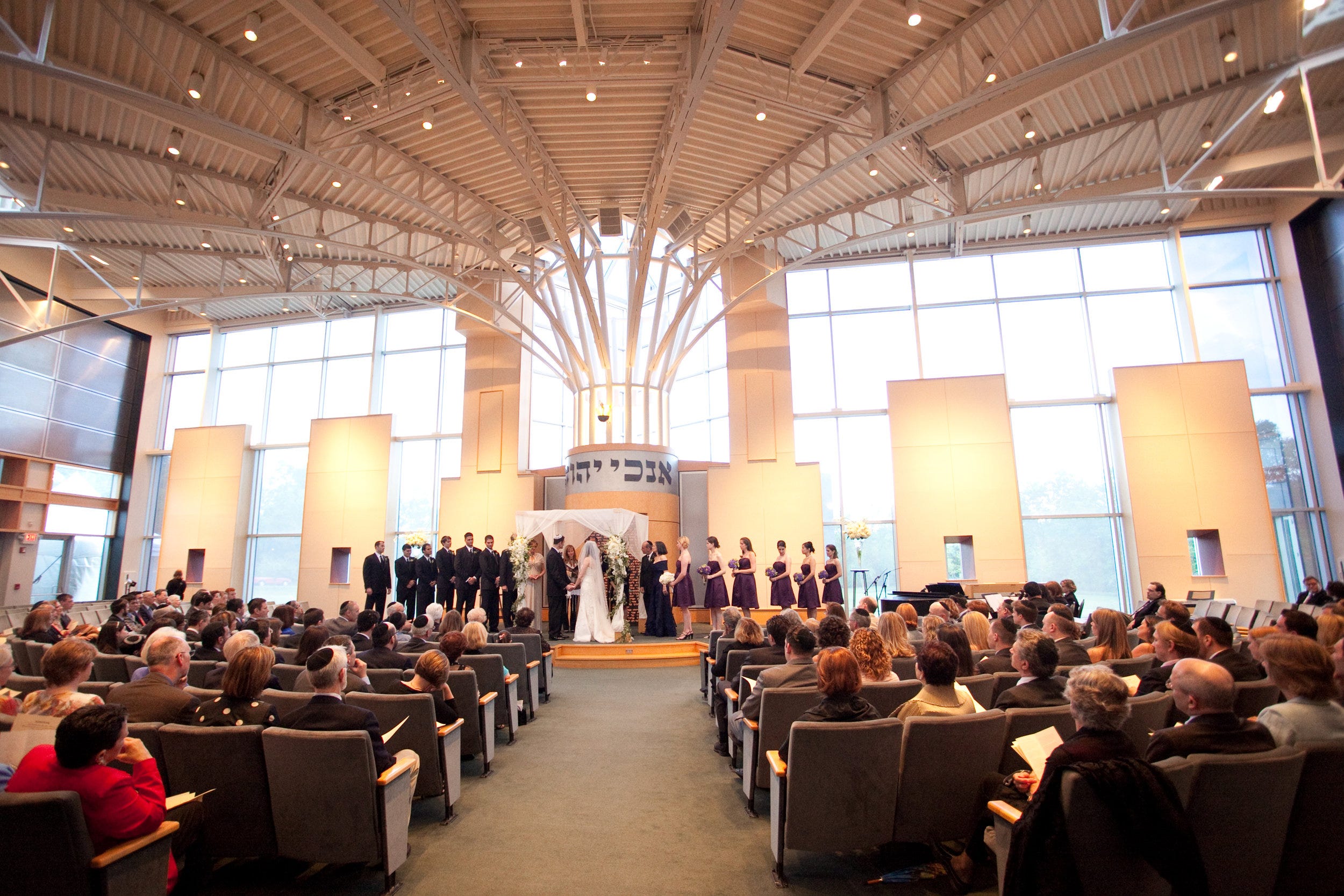
One thing led to another, and Berman fell in with a Reform rabbi in Nashville who studied closely with him over the next few years, culminating in his 2006 conversion. That summer, Berman traveled to Israel with the Silver Jews to play a few shows and reconnect with his heritage; the trip was immortalized in a brief but charming lo-fi documentary. In 2008, Berman told The Jewish Chronicle that “Judaism is about making peace with life, so I felt as though I had given myself an answer.”
He was playing shows here and there, releasing music, and seemed more or less happy. But David Berman was a troubled guy, and neither Judaism nor sobriety could fix what ailed him. In 2009, he published a fairly manic letter announcing the disbanding of the Silver Jews; in it, he blamed his father, a political lobbyist, whom he termed “Dr. Evil,” an “exploiter” and “scoundrel.” Berman wrote that his father’s impact on the world was too dreadful to be overcome by a rock band. Things, it seemed, were starting to get dark again.
There’s a concept in Jewish mysticism (the Lurianic kabbalah, specifically) called tzimtzum, used to explain the cosmological birth of the physical world. The idea is that God had to withdraw from the world in order to create space for creation. This is not understood as an abandonment of the world, but conceptualized instead as representative of a cyclical, patterned spiritual arrangement. There is presence, and then absence, and then presence again. Light, darkness, light. If this idea interests you, I have about five million pages of the scholar Gershom Scholem for you to read.
In his essay “Reflections on Jewish Theology” (and elsewhere) Scholem theorizes that the literary world depicted by Franz Kafka is one defined by theologia negativa, negative theology—a world that had “lost the Revelation,” where God’s presence was felt only through its absence. Scholem termed this the “experience of modern man…for whom nothing has remained of God but the void.”By the end of his life, Berman had become disillusioned with his life as a Jew. He wrote on his blog:
There was no real place for me in Judaism. Maybe if there was I would’ve hung in there, but I was attracted to the social-justice aspects of Judaism, and I was attracted to the prophets…Part of it was also that Judaism is all about community…and where I live in Nashville, there’s just nothing there. The reform temples—the rabbis are like anchormen. There was just no community for me.
More than one music critic has taken this as evidence that Berman’s Judaism was superficial, just a shortlived phase of his life. Something to be treated as a footnote or character quirk. But this view is, I think, belied by David Berman’s actual body of work. See below:
From the 1994 debut album, Starlite Walker, Berman slyly terms Jesus a “rebel Jew” who “died for you and your sins.”
On “There Is a Place,” from 2005’s Tanglewood Numbers, Berman sings about seeing “God’s shadow on this world”—a reference to HaMakom, “The Place,” one of God’s names in the Hebrew Bible.
“Punks in the Beerlight,” 2005 (see above).
The song “What Is Not But Could Be If,” from 2008’s Lookout Mountain, Lookout Sea, is a Kabbalistic meditation on limitless potential (Ein Sof, or “no end,” the infinite God) vs. actual creation.
“Margaritas at the Mall,” 2019 (see below).
If you only listen to one David Berman song, I would ask you to choose “Margaritas at the Mall.” The song has a warm and vibrant feel, fleshed out by buoyant organ and steel-pedal guitar. It is more straightforward-sounding than most Silver Jews songs, but lyrically it is extremely complex, and Berman’s most explicitly theological work, in which he articulates what it’s like to live inside the void of revelation described by Gershom Scholem.
Drawn up all my findings
And I warn you they are candid
My every day begins
With reminders I’ve been stranded on this
Planet where I’ve landed Beneath this gray as granite sky A place I wake up blushing like I’m ashamed to be alive
I love the idea of warning the listener as the song begins—these are not just lyrics, they are his findings, and they are candid. And what are those findings? We start with him speaking of isolation, of being “stranded” on the planet where he’s “landed;” the alienesque imagery reminds me of what Moses said in Exodus: I have been a stranger in a strange land.
How long can a world go on under such a subtle god?
How long can a world go on with no new word from God?
See the plod of the flawed individual looking for a nod from God
Trodding the sod of the visible with no new word from God
Here we find the song’s heart, and a bracing insight into the mind of Berman near the end of his life. Berman, the “flawed individual,” trudges through the visible world, receiving nothing from his God, not even the “nod” he would be willing to accept. He is overcome by theologia negativa; revelation withdrawn, God’s presence via absence.
The chorus of the song, where Berman sings about—what else—drinking margaritas at the mall, is a self-aware and ironic coming to terms with the reality of life in this spiritual vacuum. It’s been analyzed as a withering assessment of existence under late capitalism, and I suppose it’s that too, although I’m not quite Marxist enough to make the materiality central to my reading. Regardless, it’s the narrator throwing his hands up and saying, fuck it—might as well just drink some margaritas at the mall. The cheap and vacuous aesthetics of shopping mall cocktails only serves to underline the broader point.
When Purple Mountains was released in the summer of 2019, Berman seemed to be experiencing a powerful creative rebirth. The album was brilliant, praised by all the right people; a tour was in the works.
And then, in August of the same year, he killed himself.
the cycle cut short
I really don’t want to make the obvious metaphorical connection here. But it’s hard not to juxtapose these things when you think about “Margaritas at the Mall,” when you think about suicide. It’s hard not to think about the idea of God’s withdrawal from the physical world, his absence, and the way such a spiritual vacuum could have been too much for David Berman to handle.
But the truth is, David Berman tried to kill himself in 2003, he got better, and then he got worse. He was a sick man, in a very meaningful sense. It would be far too easy, too overdetermined—and, ultimately, too religious—to chalk his death up to God. Besides, he had managed to keep himself alive for the previous decade that he spent out of sight and out of mind. Closer to the real truth, and harder to bear as a fan: David Berman reentered the public eye as a recording artist, and killed himself shortly thereafter.
Whatever the ultimate cause of his tragic suicide, I hope that you are able to appreciate David Berman, or at least appreciate my appreciation for David Berman. He was a deeply Jewish artist, engaged with a spiritual life in a tradition of neurosis and doubt that stretches back to Woody Allen and Bob Dylan and Moses and Abraham.
I want to honor his Judaism as something more than an afterthought or left-behind religious dalliance. It is the lens through which his monumental art is best understood and treasured. For me, at least, it helps his work make sense. I am writing emotionally now, which I find embarrassing, but it’s not a put-on. I am so grateful that he fought it as long as he did; I am so grateful that he made the music he made.
This is beautiful
How had I never heard of him. Great piece and great music